Buy fachklinik.eu ?
We are moving the project
fachklinik.eu .
Are you interested in purchasing the domain
fachklinik.eu ?
domain@kv-gmbh.de · 0541-91531010
Buy fachklinik.eu ?
How does a photodiode work?
A photodiode is a semiconductor device that converts light into an electrical current. When light strikes the photodiode, it generates electron-hole pairs in the semiconductor material. These pairs create a flow of current, which can be measured as a voltage output. The amount of current produced is directly proportional to the intensity of the light hitting the photodiode. This makes photodiodes useful for applications such as light detection, solar cells, and optical communications. **
How is a photodiode connected?
A photodiode is typically connected in reverse bias configuration, meaning the anode is connected to the negative terminal of the power supply and the cathode is connected to the positive terminal. This allows the photodiode to operate in the photoconductive mode, where it generates a current in response to light exposure. Additionally, a resistor is often connected in series with the photodiode to limit the current and prevent damage to the diode. Finally, the output of the photodiode can be connected to a load or measurement circuit to utilize the generated current. **

Similar search terms for Photodiode
Top-Angebote
Products related to Photodiode:
-
Inspired Finds Hand Rehabilitation Grip Cushion With Finger Separators For Stroke Recovery & Therapy Hand Rehabilitation Grip Cushion With Finger Separators For Stroke Recovery & TherapyRegain comfort, strength, and confidence in your daily movements with this soft and supportive hand rehabilitation grip cushion designed to aid recovery and improve hand mobility. Whether you're recovering from a stroke, managing hand stiffness, or...34,99 $*Shipping: 0,00 $Secure redirect to the provider
-
Inspired Deals LED Light Therapy Mask For Acne Treatment With Red Blue Light Facial Therapy LED Light Therapy Mask For Acne Treatment With Red Blue Light Facial TherapyTake the next step toward clearer, healthierlooking skin with the LED light therapy mask designed for safe, athome skincare. Combining acne treatment mask technology with red and blue light, it helps target blemishes while supporting a smoother,...74,97 $*Shipping: 0,00 $Secure redirect to the provider
-
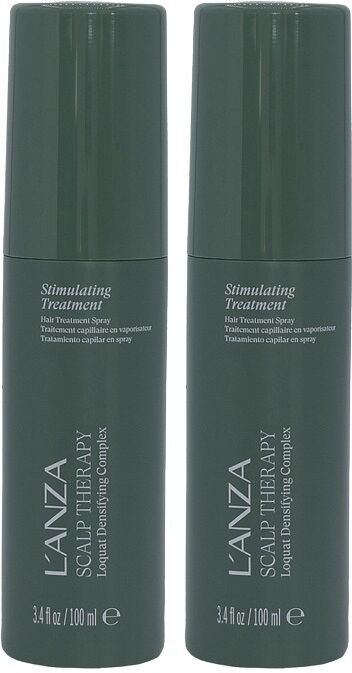
L'Anza Scalp Therapy Stimulating Treatment - 100ml DoubleThe L'Anza Scalp Therapy Stimulating Treatment is the perfect formula for Hair Thinning and Shedding. How does it work? It works to boost Circulation and Invigorates Hair Follicles. Powered by the Loquat Densifying Complex. Ingredients WATER (AQUA), ALCOHOL DENAT., POLYSORBATE 20, BUTYLENE GLYCOL, ERIOBOTRYAJAPONICA LEAF EXTRACT, HYDROLYZED VEGETABLE PROTEIN, HYDROLYZED PEA PROTEIN, POLYGONUM MULTIFLORUM EXTRACT, BIOTIN, EUCALYPTUS GLOBULUS LEAF OIL, ACHILLEA MILLEFOLIUM FLOWER EXTRACT, MENTHA PIPERITA (PEPPERMINT) LEAF EXTRACT, AESCULUS HIPPOCASTANUM (HORSE CHESTNUT) SEED EXTRACT, CRATAEGUS MONOGYNA FRUIT EXTRACT, PHYTIC ACID, DIMETHICONOL MEADOWFOAMATE, SODIUM PCA, MAGNESIUM PCA, ZINC PCA, MANGANESE PCA, ETHYLHEXYL OLIVATE, CEREUS GRANDIFLORUS (CACTUS) FLOWER EXTRACT, GLYCERIN, SODIUM CITRATE, ALCOHOL, TRIS(TETRAMETHYL-HYDROXYPIPERIDINOL) CITRATE, PEG-40 HYDROGENATED CASTOR OIL, TRIDECETH-9, SODIUM BENZOATE, POTASSIUM SORBATE, CHLORPHENESIN, BENZOIC ACID, SORBIC ACID, PHENOXYETHANOL, CAPRYLYL GLYCOL, ETHYLHEXYL-GLYCERIN, HEXYLENE GLYCOL, MENTHOL, BENZOTRIAZOLYL DODECYL P-CRESOL, SQUALANE, CITRIC ACID, PEG-8 LAURATE, LAURETH-4, ACRYLATES COPOLYMER,FRAGRANCE (PARFUM), HEXYL CINNAMAL, LIMONENE.60,80 £*Shipping: 0,00 £Secure redirect to the provider
-
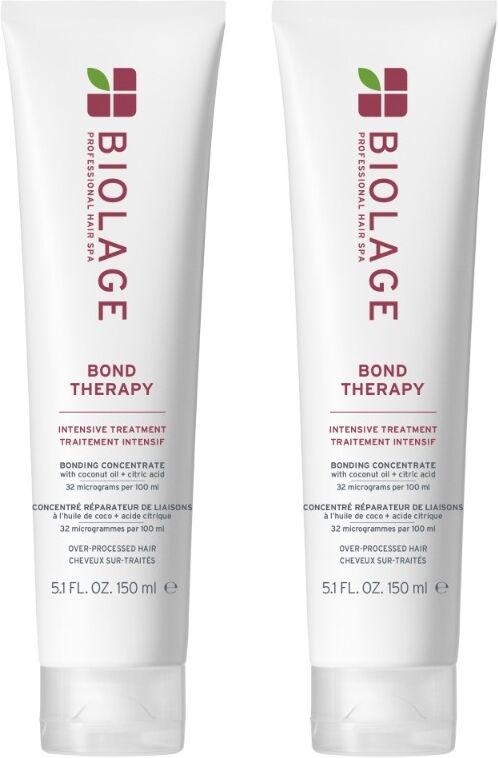
Biolage Bond Therapy Intensive Treatment 150ml DoubleStock up and save on your healthiest strands yet with this double pack of the Biolage Bond Therapy Intensive Treatment, 2 x 150ml. Bring added repair to your routine with the Biolage Bond Therapy Intensive Treatment. This pre-shampoo treatment deeply conditions and builds bonds from the inside out, leaving over-processed, damaged hair looking and feeling noticeably healthier. Key Ingredients The Bond Therapy Intensive Treatment is infused and micro-dosed with a bonding concentrate of pressed coconut oil and fermented citric acid, precisely calibrated down to the microgram to create the perfect levels of nourishment and bonding care for supreme strength and softness. Key Benefits: - Deeply repairs damaged hair by rebuilding bonds from the inside out - Strengthens over-processed hair, improving resilience and structure - Pre-shampoo treatment that enhances the effectiveness of your overall routine - Infused with pressed coconut oil for deep nourishment and softness - Contains fermented citric acid to support internal hair bonding and repair - Leaves hair visibly healthier, smoother, and more manageable Ingredients AQUA / WATER, CETEARYL ALCOHOL, GLYCERIN, BEHENTRIMONIUM CHLORIDE, STEARYL ALCOHOL, CITRIC ACID, CETYL ESTERS, SODIUM CITRATE, ISOPROPYL ALCOHOL, PARFUM / FRAGRANCE, PHENOXYETHANOL, POLYQUATERNIUM-10, POLYSORBATE 20, HYDROXYPROPYL GUAR, LIMONENE, COCOS NUCIFERA OIL / COCONUT OIL, HEXYL CINNAMAL, COUMARIN, BENZYL ALCOHOL, LINALOOL, AMYL CINNAMAL32,80 £*Shipping: 0,00 £Secure redirect to the provider


-
What components does a photodiode need in electrical engineering?
In electrical engineering, a photodiode requires several components to function effectively. These include a semiconductor material, such as silicon, which is sensitive to light and capable of generating an electric current when exposed to photons. Additionally, a photodiode needs a p-n junction to create a depletion region, which allows for the separation of electron-hole pairs when light is absorbed. Furthermore, a photodiode typically requires a reverse bias voltage to create the necessary electric field for efficient operation. Finally, a photodiode may also need a protective housing to shield it from external factors such as temperature, humidity, and mechanical stress. **
-
What is the difference between a diode and a photodiode?
A diode is a two-terminal electronic component that allows current to flow in one direction only. It is commonly used in electronic circuits to control the direction of current flow. On the other hand, a photodiode is a type of diode that is designed to convert light into electrical current. Photodiodes are used in various applications such as light sensors, solar cells, and optical communications. The key difference between a diode and a photodiode is that a photodiode is specifically designed to detect and convert light into electrical current, whereas a diode is a more general electronic component used for controlling current flow. **
-
What is the difference between a photoelement and a photodiode?
A photoelement is a general term used to describe any device that converts light into an electrical signal, including photodiodes. A photodiode is a specific type of photoelement that operates in reverse bias, meaning it only allows current to flow when light is present. Photodiodes are commonly used in applications such as light detection, solar cells, and optical communication systems. In contrast, a photoelement can refer to a broader range of light-sensitive devices, including phototransistors, photoresistors, and photovoltaic cells. **
-
What are the different characteristics between a photodiode and a photoresistor?
Photodiodes are semiconductor devices that generate a current when exposed to light, offering a fast response time and high sensitivity to light intensity changes. They are more expensive and complex to use compared to photoresistors. Photoresistors, on the other hand, are passive components that change resistance based on the amount of light they are exposed to, providing a simple and cost-effective solution for light detection. They have a slower response time and are less sensitive to light compared to photodiodes. **


How can the light sensor (photodiode) be read out analog-digital?
The light sensor (photodiode) can be read out analog-digital by using an analog-to-digital converter (ADC). The photodiode generates a current or voltage signal in response to the incident light, which is then converted into a digital value by the ADC. The ADC samples the analog signal at regular intervals and quantizes it into discrete digital values, which can then be processed and analyzed by a microcontroller or computer. This digital output can be used to measure the intensity of the light and make decisions or trigger actions based on the light level. **
What is the difference between a photodiode, a phototransistor, and a photoresistor?
A photodiode is a semiconductor device that converts light into an electrical current. It operates in reverse bias mode and has a fast response time. A phototransistor is a type of transistor that is sensitive to light and amplifies the current flowing through it when exposed to light. It operates in active mode and is more sensitive than a photodiode. A photoresistor, on the other hand, is a passive component whose resistance changes in response to light intensity. It does not amplify the current like a phototransistor and is commonly used in light sensing applications. **
Top-Angebote
Products related to Photodiode:
-
Biolage Bond Therapy Intensive Treatment 150mlBring added repair to your routine with the Biolage Bond Therapy Intensive Treatment. This pre-shampoo treatment deeply conditions and builds bonds from the inside out, leaving over-processed, damaged hair looking and feeling noticeably healthier. Key Ingredients The Bond Therapy Intensive Treatment is infused and micro-dosed with a bonding concentrate of pressed coconut oil and fermented citric acid, precisely calibrated down to the microgram to create the perfect levels of nourishment and bonding care for supreme strength and softness. Key Benefits: - Deeply repairs damaged hair by rebuilding bonds from the inside out - Strengthens over-processed hair, improving resilience and structure - Pre-shampoo treatment that enhances the effectiveness of your overall routine - Infused with pressed coconut oil for deep nourishment and softness - Contains fermented citric acid to support internal hair bonding and repair - Leaves hair visibly healthier, smoother, and more manageable Ingredients AQUA / WATER, CETEARYL ALCOHOL, GLYCERIN, BEHENTRIMONIUM CHLORIDE, STEARYL ALCOHOL, CITRIC ACID, CETYL ESTERS, SODIUM CITRATE, ISOPROPYL ALCOHOL, PARFUM / FRAGRANCE, PHENOXYETHANOL, POLYQUATERNIUM-10, POLYSORBATE 20, HYDROXYPROPYL GUAR, LIMONENE, COCOS NUCIFERA OIL / COCONUT OIL, HEXYL CINNAMAL, COUMARIN, BENZYL ALCOHOL, LINALOOL, AMYL CINNAMAL17,43 £*Shipping: 2,95 £Secure redirect to the provider
-
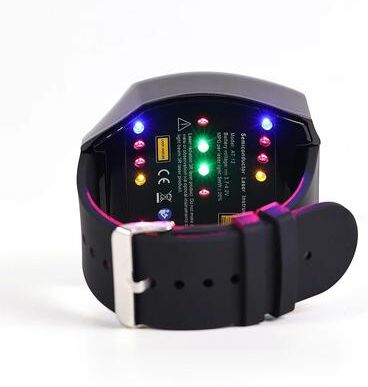
Uplifted Goods Laser Therapy Watch For Circulation And Vascular Wellness blackEnhance your daily wellness routine with this laser therapy watch designed to support healthy blood circulation and overall vascular health. Using gentle low level laser light, it provides a non invasive way to promote better blood flow and oxygen...1422,50 $*Shipping: 0,00 $Secure redirect to the provider
-
Inspired Finds Hand Rehabilitation Grip Cushion With Finger Separators For Stroke Recovery & Therapy Hand Rehabilitation Grip Cushion With Finger Separators For Stroke Recovery & TherapyRegain comfort, strength, and confidence in your daily movements with this soft and supportive hand rehabilitation grip cushion designed to aid recovery and improve hand mobility. Whether you're recovering from a stroke, managing hand stiffness, or...34,99 $*Shipping: 0,00 $Secure redirect to the provider
-
Inspired Deals LED Light Therapy Mask For Acne Treatment With Red Blue Light Facial Therapy LED Light Therapy Mask For Acne Treatment With Red Blue Light Facial TherapyTake the next step toward clearer, healthierlooking skin with the LED light therapy mask designed for safe, athome skincare. Combining acne treatment mask technology with red and blue light, it helps target blemishes while supporting a smoother,...74,97 $*Shipping: 0,00 $Secure redirect to the provider
-
How does a photodiode work?
A photodiode is a semiconductor device that converts light into an electrical current. When light strikes the photodiode, it generates electron-hole pairs in the semiconductor material. These pairs create a flow of current, which can be measured as a voltage output. The amount of current produced is directly proportional to the intensity of the light hitting the photodiode. This makes photodiodes useful for applications such as light detection, solar cells, and optical communications. **
-
How is a photodiode connected?
A photodiode is typically connected in reverse bias configuration, meaning the anode is connected to the negative terminal of the power supply and the cathode is connected to the positive terminal. This allows the photodiode to operate in the photoconductive mode, where it generates a current in response to light exposure. Additionally, a resistor is often connected in series with the photodiode to limit the current and prevent damage to the diode. Finally, the output of the photodiode can be connected to a load or measurement circuit to utilize the generated current. **
-
What components does a photodiode need in electrical engineering?
In electrical engineering, a photodiode requires several components to function effectively. These include a semiconductor material, such as silicon, which is sensitive to light and capable of generating an electric current when exposed to photons. Additionally, a photodiode needs a p-n junction to create a depletion region, which allows for the separation of electron-hole pairs when light is absorbed. Furthermore, a photodiode typically requires a reverse bias voltage to create the necessary electric field for efficient operation. Finally, a photodiode may also need a protective housing to shield it from external factors such as temperature, humidity, and mechanical stress. **
-
What is the difference between a diode and a photodiode?
A diode is a two-terminal electronic component that allows current to flow in one direction only. It is commonly used in electronic circuits to control the direction of current flow. On the other hand, a photodiode is a type of diode that is designed to convert light into electrical current. Photodiodes are used in various applications such as light sensors, solar cells, and optical communications. The key difference between a diode and a photodiode is that a photodiode is specifically designed to detect and convert light into electrical current, whereas a diode is a more general electronic component used for controlling current flow. **
Similar search terms for Photodiode
-
L'Anza Scalp Therapy Stimulating Treatment - 100ml DoubleThe L'Anza Scalp Therapy Stimulating Treatment is the perfect formula for Hair Thinning and Shedding. How does it work? It works to boost Circulation and Invigorates Hair Follicles. Powered by the Loquat Densifying Complex. Ingredients WATER (AQUA), ALCOHOL DENAT., POLYSORBATE 20, BUTYLENE GLYCOL, ERIOBOTRYAJAPONICA LEAF EXTRACT, HYDROLYZED VEGETABLE PROTEIN, HYDROLYZED PEA PROTEIN, POLYGONUM MULTIFLORUM EXTRACT, BIOTIN, EUCALYPTUS GLOBULUS LEAF OIL, ACHILLEA MILLEFOLIUM FLOWER EXTRACT, MENTHA PIPERITA (PEPPERMINT) LEAF EXTRACT, AESCULUS HIPPOCASTANUM (HORSE CHESTNUT) SEED EXTRACT, CRATAEGUS MONOGYNA FRUIT EXTRACT, PHYTIC ACID, DIMETHICONOL MEADOWFOAMATE, SODIUM PCA, MAGNESIUM PCA, ZINC PCA, MANGANESE PCA, ETHYLHEXYL OLIVATE, CEREUS GRANDIFLORUS (CACTUS) FLOWER EXTRACT, GLYCERIN, SODIUM CITRATE, ALCOHOL, TRIS(TETRAMETHYL-HYDROXYPIPERIDINOL) CITRATE, PEG-40 HYDROGENATED CASTOR OIL, TRIDECETH-9, SODIUM BENZOATE, POTASSIUM SORBATE, CHLORPHENESIN, BENZOIC ACID, SORBIC ACID, PHENOXYETHANOL, CAPRYLYL GLYCOL, ETHYLHEXYL-GLYCERIN, HEXYLENE GLYCOL, MENTHOL, BENZOTRIAZOLYL DODECYL P-CRESOL, SQUALANE, CITRIC ACID, PEG-8 LAURATE, LAURETH-4, ACRYLATES COPOLYMER,FRAGRANCE (PARFUM), HEXYL CINNAMAL, LIMONENE.60,80 £*Shipping: 0,00 £Secure redirect to the provider
-
Biolage Bond Therapy Intensive Treatment 150ml DoubleStock up and save on your healthiest strands yet with this double pack of the Biolage Bond Therapy Intensive Treatment, 2 x 150ml. Bring added repair to your routine with the Biolage Bond Therapy Intensive Treatment. This pre-shampoo treatment deeply conditions and builds bonds from the inside out, leaving over-processed, damaged hair looking and feeling noticeably healthier. Key Ingredients The Bond Therapy Intensive Treatment is infused and micro-dosed with a bonding concentrate of pressed coconut oil and fermented citric acid, precisely calibrated down to the microgram to create the perfect levels of nourishment and bonding care for supreme strength and softness. Key Benefits: - Deeply repairs damaged hair by rebuilding bonds from the inside out - Strengthens over-processed hair, improving resilience and structure - Pre-shampoo treatment that enhances the effectiveness of your overall routine - Infused with pressed coconut oil for deep nourishment and softness - Contains fermented citric acid to support internal hair bonding and repair - Leaves hair visibly healthier, smoother, and more manageable Ingredients AQUA / WATER, CETEARYL ALCOHOL, GLYCERIN, BEHENTRIMONIUM CHLORIDE, STEARYL ALCOHOL, CITRIC ACID, CETYL ESTERS, SODIUM CITRATE, ISOPROPYL ALCOHOL, PARFUM / FRAGRANCE, PHENOXYETHANOL, POLYQUATERNIUM-10, POLYSORBATE 20, HYDROXYPROPYL GUAR, LIMONENE, COCOS NUCIFERA OIL / COCONUT OIL, HEXYL CINNAMAL, COUMARIN, BENZYL ALCOHOL, LINALOOL, AMYL CINNAMAL32,80 £*Shipping: 0,00 £Secure redirect to the provider
-
Handpicked Choices Red Light Therapy Belt Infrared Therapy Wrap For Back Waist Muscle Recovery And Body Wellness blueExperience soothing comfort with this Red Light Therapy Belt, designed to help you relax after long days, intense workouts, or everyday physical strain. Combining 660nm red light and 850nm nearinfrared light, it offers a convenient, handsfree...109,97 $*Shipping: 0,00 $Secure redirect to the provider
-
Uplifted Goods Laser Therapy Watch For Circulation And Vascular Wellness whiteEnhance your daily wellness routine with this laser therapy watch designed to support healthy blood circulation and overall vascular health. Using gentle low level laser light, it provides a non invasive way to promote better blood flow and oxygen...928,50 $*Shipping: 0,00 $Secure redirect to the provider
-
What is the difference between a photoelement and a photodiode?
A photoelement is a general term used to describe any device that converts light into an electrical signal, including photodiodes. A photodiode is a specific type of photoelement that operates in reverse bias, meaning it only allows current to flow when light is present. Photodiodes are commonly used in applications such as light detection, solar cells, and optical communication systems. In contrast, a photoelement can refer to a broader range of light-sensitive devices, including phototransistors, photoresistors, and photovoltaic cells. **
-
What are the different characteristics between a photodiode and a photoresistor?
Photodiodes are semiconductor devices that generate a current when exposed to light, offering a fast response time and high sensitivity to light intensity changes. They are more expensive and complex to use compared to photoresistors. Photoresistors, on the other hand, are passive components that change resistance based on the amount of light they are exposed to, providing a simple and cost-effective solution for light detection. They have a slower response time and are less sensitive to light compared to photodiodes. **
-
How can the light sensor (photodiode) be read out analog-digital?
The light sensor (photodiode) can be read out analog-digital by using an analog-to-digital converter (ADC). The photodiode generates a current or voltage signal in response to the incident light, which is then converted into a digital value by the ADC. The ADC samples the analog signal at regular intervals and quantizes it into discrete digital values, which can then be processed and analyzed by a microcontroller or computer. This digital output can be used to measure the intensity of the light and make decisions or trigger actions based on the light level. **
-
What is the difference between a photodiode, a phototransistor, and a photoresistor?
A photodiode is a semiconductor device that converts light into an electrical current. It operates in reverse bias mode and has a fast response time. A phototransistor is a type of transistor that is sensitive to light and amplifies the current flowing through it when exposed to light. It operates in active mode and is more sensitive than a photodiode. A photoresistor, on the other hand, is a passive component whose resistance changes in response to light intensity. It does not amplify the current like a phototransistor and is commonly used in light sensing applications. **
* All prices are inclusive of VAT and, if applicable, plus shipping costs. The offer information is based on the details provided by the respective shop and is updated through automated processes. Real-time updates do not occur, so deviations can occur in individual cases. ** Note: Parts of this content were created by AI.