Buy fachklinik.eu ?
We are moving the project
fachklinik.eu .
Are you interested in purchasing the domain
fachklinik.eu ?
domain@kv-gmbh.de · 0541-91531010
Buy fachklinik.eu ?
What is the difference between standard enthalpy of formation, enthalpy of formation, and reaction enthalpy?
The standard enthalpy of formation is the enthalpy change that occurs when one mole of a compound is formed from its elements in their standard states. Enthalpy of formation is the enthalpy change that occurs when one mole of a compound is formed from its elements in their standard states, but it can be under non-standard conditions. Reaction enthalpy is the enthalpy change that occurs in a chemical reaction, which can be exothermic (heat is released) or endothermic (heat is absorbed). **
What is enthalpy?
Enthalpy is a thermodynamic property of a system that represents the total energy of the system, including its internal energy and the energy required to maintain constant pressure. It is often denoted as H and is expressed in units of joules. Enthalpy is important in understanding and analyzing processes such as chemical reactions and phase changes, as it provides a measure of the heat content of a system. In practical terms, enthalpy change is often used to quantify the heat absorbed or released during a process at constant pressure. **


Similar search terms for Enthalpy
Top-Angebote
Products related to Enthalpy:
-
Inspired Deals LED Light Therapy Mask For Acne Treatment With Red Blue Light Facial Therapy LED Light Therapy Mask For Acne Treatment With Red Blue Light Facial TherapyTake the next step toward clearer, healthierlooking skin with the LED light therapy mask designed for safe, athome skincare. Combining acne treatment mask technology with red and blue light, it helps target blemishes while supporting a smoother,...74,97 $*Shipping: 0,00 $Secure redirect to the provider
-
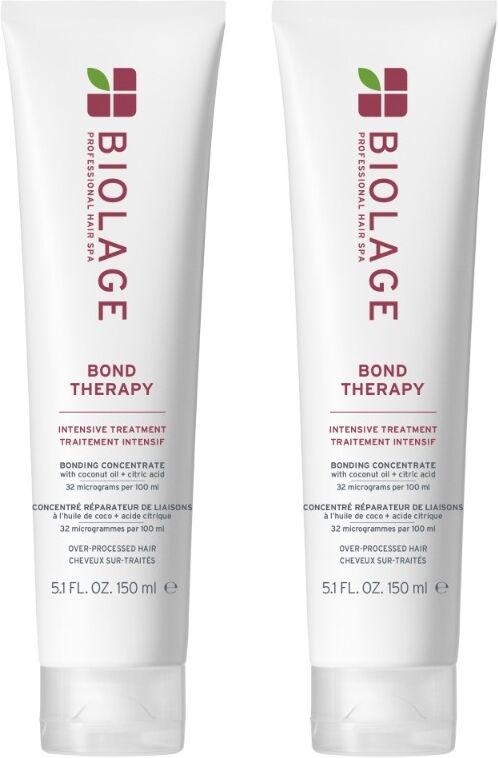
Biolage Bond Therapy Intensive Treatment 150ml DoubleStock up and save on your healthiest strands yet with this double pack of the Biolage Bond Therapy Intensive Treatment, 2 x 150ml. Bring added repair to your routine with the Biolage Bond Therapy Intensive Treatment. This pre-shampoo treatment deeply conditions and builds bonds from the inside out, leaving over-processed, damaged hair looking and feeling noticeably healthier. Key Ingredients The Bond Therapy Intensive Treatment is infused and micro-dosed with a bonding concentrate of pressed coconut oil and fermented citric acid, precisely calibrated down to the microgram to create the perfect levels of nourishment and bonding care for supreme strength and softness. Key Benefits: - Deeply repairs damaged hair by rebuilding bonds from the inside out - Strengthens over-processed hair, improving resilience and structure - Pre-shampoo treatment that enhances the effectiveness of your overall routine - Infused with pressed coconut oil for deep nourishment and softness - Contains fermented citric acid to support internal hair bonding and repair - Leaves hair visibly healthier, smoother, and more manageable Ingredients AQUA / WATER, CETEARYL ALCOHOL, GLYCERIN, BEHENTRIMONIUM CHLORIDE, STEARYL ALCOHOL, CITRIC ACID, CETYL ESTERS, SODIUM CITRATE, ISOPROPYL ALCOHOL, PARFUM / FRAGRANCE, PHENOXYETHANOL, POLYQUATERNIUM-10, POLYSORBATE 20, HYDROXYPROPYL GUAR, LIMONENE, COCOS NUCIFERA OIL / COCONUT OIL, HEXYL CINNAMAL, COUMARIN, BENZYL ALCOHOL, LINALOOL, AMYL CINNAMAL32,80 £*Shipping: 0,00 £Secure redirect to the provider
-
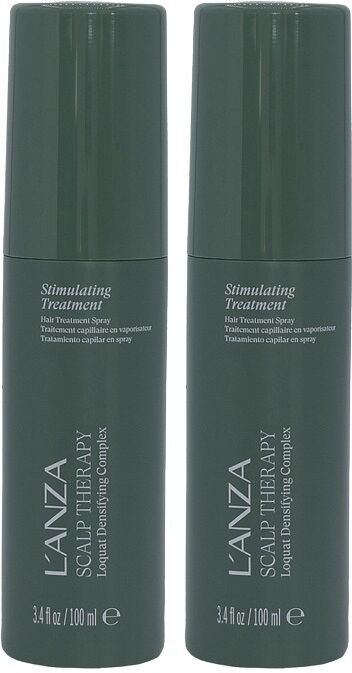
L'Anza Scalp Therapy Stimulating Treatment - 100ml DoubleThe L'Anza Scalp Therapy Stimulating Treatment is the perfect formula for Hair Thinning and Shedding. How does it work? It works to boost Circulation and Invigorates Hair Follicles. Powered by the Loquat Densifying Complex. Ingredients WATER (AQUA), ALCOHOL DENAT., POLYSORBATE 20, BUTYLENE GLYCOL, ERIOBOTRYAJAPONICA LEAF EXTRACT, HYDROLYZED VEGETABLE PROTEIN, HYDROLYZED PEA PROTEIN, POLYGONUM MULTIFLORUM EXTRACT, BIOTIN, EUCALYPTUS GLOBULUS LEAF OIL, ACHILLEA MILLEFOLIUM FLOWER EXTRACT, MENTHA PIPERITA (PEPPERMINT) LEAF EXTRACT, AESCULUS HIPPOCASTANUM (HORSE CHESTNUT) SEED EXTRACT, CRATAEGUS MONOGYNA FRUIT EXTRACT, PHYTIC ACID, DIMETHICONOL MEADOWFOAMATE, SODIUM PCA, MAGNESIUM PCA, ZINC PCA, MANGANESE PCA, ETHYLHEXYL OLIVATE, CEREUS GRANDIFLORUS (CACTUS) FLOWER EXTRACT, GLYCERIN, SODIUM CITRATE, ALCOHOL, TRIS(TETRAMETHYL-HYDROXYPIPERIDINOL) CITRATE, PEG-40 HYDROGENATED CASTOR OIL, TRIDECETH-9, SODIUM BENZOATE, POTASSIUM SORBATE, CHLORPHENESIN, BENZOIC ACID, SORBIC ACID, PHENOXYETHANOL, CAPRYLYL GLYCOL, ETHYLHEXYL-GLYCERIN, HEXYLENE GLYCOL, MENTHOL, BENZOTRIAZOLYL DODECYL P-CRESOL, SQUALANE, CITRIC ACID, PEG-8 LAURATE, LAURETH-4, ACRYLATES COPOLYMER,FRAGRANCE (PARFUM), HEXYL CINNAMAL, LIMONENE.60,80 £*Shipping: 0,00 £Secure redirect to the provider
-
Uplifted Goods Laser Therapy Watch For Circulation And Vascular Wellness whiteEnhance your daily wellness routine with this laser therapy watch designed to support healthy blood circulation and overall vascular health. Using gentle low level laser light, it provides a non invasive way to promote better blood flow and oxygen...928,50 $*Shipping: 0,00 $Secure redirect to the provider


-
What is the difference between bond enthalpy and formation enthalpy?
Bond enthalpy is the energy required to break a specific chemical bond in a molecule, while formation enthalpy is the energy change when one mole of a compound is formed from its elements in their standard states. Bond enthalpy is specific to a particular bond within a molecule, while formation enthalpy is a measure of the overall energy change in forming a compound. Bond enthalpy is typically measured in kilojoules per mole (kJ/mol), while formation enthalpy is also measured in kilojoules per mole (kJ/mol). **
-
What is Hess's law for standard formation enthalpy and combustion enthalpy?
Hess's law states that the total enthalpy change for a reaction is the same regardless of the number of steps taken to reach the final products. This principle can be applied to standard formation enthalpies and combustion enthalpies by using a series of known enthalpy changes to calculate the overall enthalpy change for a reaction. By manipulating and combining these known enthalpies, Hess's law allows us to determine the enthalpy change for reactions that may not be easily measured directly. **
-
What is the difference between standard formation enthalpy and enthalpy change?
Standard formation enthalpy is the enthalpy change that occurs when one mole of a compound is formed from its elements in their standard states. It is a specific type of enthalpy change that is measured under standard conditions. Enthalpy change, on the other hand, is a more general term that refers to the overall change in enthalpy of a system during a chemical reaction or process, regardless of whether it involves formation of a compound or not. Enthalpy change can be positive (endothermic) or negative (exothermic), depending on whether energy is absorbed or released during the process. **
-
How to calculate the reaction enthalpy from the molar bond enthalpy?
To calculate the reaction enthalpy from the molar bond enthalpy, you need to consider the difference between the sum of the bond enthalpies of the reactants and the sum of the bond enthalpies of the products. First, calculate the total bond enthalpy of all the bonds broken in the reactants, and then calculate the total bond enthalpy of all the bonds formed in the products. The reaction enthalpy is then the difference between these two values, with the bond enthalpies of the products subtracted from the bond enthalpies of the reactants. This calculation allows you to determine whether a reaction is exothermic (releasing heat) or endothermic (absorbing heat). **


What is Hess's law equation for standard formation enthalpy and combustion enthalpy?
Hess's law states that the overall enthalpy change for a reaction is the same regardless of the number of steps taken to reach the final products. For standard formation enthalpy, the equation is: ∆Hf°(products) = ∑∆Hf°(products) - ∑∆Hf°(reactants). For combustion enthalpy, the equation is: ∆Hcomb° = ∑∆Hf°(products) - ∑∆Hf°(reactants). These equations allow us to calculate the enthalpy change of a reaction using the enthalpies of formation of the reactants and products. **
What is the difference between standard enthalpy of formation and enthalpy change?
The standard enthalpy of formation is the enthalpy change that occurs when one mole of a compound is formed from its elements in their standard states. It is a specific type of enthalpy change that is measured under standard conditions. On the other hand, enthalpy change refers to the overall change in enthalpy of a system during a chemical reaction or process, which can include various types of enthalpy changes such as enthalpy of reaction, enthalpy of combustion, or enthalpy of solution. In summary, standard enthalpy of formation is a specific type of enthalpy change that relates to the formation of a compound from its elements, while enthalpy change is a broader term that encompasses various types of enthalpy changes in a system. **
Top-Angebote
Products related to Enthalpy:
-
Biolage Bond Therapy Intensive Treatment 150mlBring added repair to your routine with the Biolage Bond Therapy Intensive Treatment. This pre-shampoo treatment deeply conditions and builds bonds from the inside out, leaving over-processed, damaged hair looking and feeling noticeably healthier. Key Ingredients The Bond Therapy Intensive Treatment is infused and micro-dosed with a bonding concentrate of pressed coconut oil and fermented citric acid, precisely calibrated down to the microgram to create the perfect levels of nourishment and bonding care for supreme strength and softness. Key Benefits: - Deeply repairs damaged hair by rebuilding bonds from the inside out - Strengthens over-processed hair, improving resilience and structure - Pre-shampoo treatment that enhances the effectiveness of your overall routine - Infused with pressed coconut oil for deep nourishment and softness - Contains fermented citric acid to support internal hair bonding and repair - Leaves hair visibly healthier, smoother, and more manageable Ingredients AQUA / WATER, CETEARYL ALCOHOL, GLYCERIN, BEHENTRIMONIUM CHLORIDE, STEARYL ALCOHOL, CITRIC ACID, CETYL ESTERS, SODIUM CITRATE, ISOPROPYL ALCOHOL, PARFUM / FRAGRANCE, PHENOXYETHANOL, POLYQUATERNIUM-10, POLYSORBATE 20, HYDROXYPROPYL GUAR, LIMONENE, COCOS NUCIFERA OIL / COCONUT OIL, HEXYL CINNAMAL, COUMARIN, BENZYL ALCOHOL, LINALOOL, AMYL CINNAMAL17,43 £*Shipping: 2,95 £Secure redirect to the provider
-
Inspired Finds Hand Rehabilitation Grip Cushion With Finger Separators For Stroke Recovery & Therapy Hand Rehabilitation Grip Cushion With Finger Separators For Stroke Recovery & TherapyRegain comfort, strength, and confidence in your daily movements with this soft and supportive hand rehabilitation grip cushion designed to aid recovery and improve hand mobility. Whether you're recovering from a stroke, managing hand stiffness, or...34,99 $*Shipping: 0,00 $Secure redirect to the provider
-
Inspired Deals LED Light Therapy Mask For Acne Treatment With Red Blue Light Facial Therapy LED Light Therapy Mask For Acne Treatment With Red Blue Light Facial TherapyTake the next step toward clearer, healthierlooking skin with the LED light therapy mask designed for safe, athome skincare. Combining acne treatment mask technology with red and blue light, it helps target blemishes while supporting a smoother,...74,97 $*Shipping: 0,00 $Secure redirect to the provider
-
Biolage Bond Therapy Intensive Treatment 150ml DoubleStock up and save on your healthiest strands yet with this double pack of the Biolage Bond Therapy Intensive Treatment, 2 x 150ml. Bring added repair to your routine with the Biolage Bond Therapy Intensive Treatment. This pre-shampoo treatment deeply conditions and builds bonds from the inside out, leaving over-processed, damaged hair looking and feeling noticeably healthier. Key Ingredients The Bond Therapy Intensive Treatment is infused and micro-dosed with a bonding concentrate of pressed coconut oil and fermented citric acid, precisely calibrated down to the microgram to create the perfect levels of nourishment and bonding care for supreme strength and softness. Key Benefits: - Deeply repairs damaged hair by rebuilding bonds from the inside out - Strengthens over-processed hair, improving resilience and structure - Pre-shampoo treatment that enhances the effectiveness of your overall routine - Infused with pressed coconut oil for deep nourishment and softness - Contains fermented citric acid to support internal hair bonding and repair - Leaves hair visibly healthier, smoother, and more manageable Ingredients AQUA / WATER, CETEARYL ALCOHOL, GLYCERIN, BEHENTRIMONIUM CHLORIDE, STEARYL ALCOHOL, CITRIC ACID, CETYL ESTERS, SODIUM CITRATE, ISOPROPYL ALCOHOL, PARFUM / FRAGRANCE, PHENOXYETHANOL, POLYQUATERNIUM-10, POLYSORBATE 20, HYDROXYPROPYL GUAR, LIMONENE, COCOS NUCIFERA OIL / COCONUT OIL, HEXYL CINNAMAL, COUMARIN, BENZYL ALCOHOL, LINALOOL, AMYL CINNAMAL32,80 £*Shipping: 0,00 £Secure redirect to the provider
-
What is the difference between standard enthalpy of formation, enthalpy of formation, and reaction enthalpy?
The standard enthalpy of formation is the enthalpy change that occurs when one mole of a compound is formed from its elements in their standard states. Enthalpy of formation is the enthalpy change that occurs when one mole of a compound is formed from its elements in their standard states, but it can be under non-standard conditions. Reaction enthalpy is the enthalpy change that occurs in a chemical reaction, which can be exothermic (heat is released) or endothermic (heat is absorbed). **
-
What is enthalpy?
Enthalpy is a thermodynamic property of a system that represents the total energy of the system, including its internal energy and the energy required to maintain constant pressure. It is often denoted as H and is expressed in units of joules. Enthalpy is important in understanding and analyzing processes such as chemical reactions and phase changes, as it provides a measure of the heat content of a system. In practical terms, enthalpy change is often used to quantify the heat absorbed or released during a process at constant pressure. **
-
What is the difference between bond enthalpy and formation enthalpy?
Bond enthalpy is the energy required to break a specific chemical bond in a molecule, while formation enthalpy is the energy change when one mole of a compound is formed from its elements in their standard states. Bond enthalpy is specific to a particular bond within a molecule, while formation enthalpy is a measure of the overall energy change in forming a compound. Bond enthalpy is typically measured in kilojoules per mole (kJ/mol), while formation enthalpy is also measured in kilojoules per mole (kJ/mol). **
-
What is Hess's law for standard formation enthalpy and combustion enthalpy?
Hess's law states that the total enthalpy change for a reaction is the same regardless of the number of steps taken to reach the final products. This principle can be applied to standard formation enthalpies and combustion enthalpies by using a series of known enthalpy changes to calculate the overall enthalpy change for a reaction. By manipulating and combining these known enthalpies, Hess's law allows us to determine the enthalpy change for reactions that may not be easily measured directly. **
Similar search terms for Enthalpy
-
L'Anza Scalp Therapy Stimulating Treatment - 100ml DoubleThe L'Anza Scalp Therapy Stimulating Treatment is the perfect formula for Hair Thinning and Shedding. How does it work? It works to boost Circulation and Invigorates Hair Follicles. Powered by the Loquat Densifying Complex. Ingredients WATER (AQUA), ALCOHOL DENAT., POLYSORBATE 20, BUTYLENE GLYCOL, ERIOBOTRYAJAPONICA LEAF EXTRACT, HYDROLYZED VEGETABLE PROTEIN, HYDROLYZED PEA PROTEIN, POLYGONUM MULTIFLORUM EXTRACT, BIOTIN, EUCALYPTUS GLOBULUS LEAF OIL, ACHILLEA MILLEFOLIUM FLOWER EXTRACT, MENTHA PIPERITA (PEPPERMINT) LEAF EXTRACT, AESCULUS HIPPOCASTANUM (HORSE CHESTNUT) SEED EXTRACT, CRATAEGUS MONOGYNA FRUIT EXTRACT, PHYTIC ACID, DIMETHICONOL MEADOWFOAMATE, SODIUM PCA, MAGNESIUM PCA, ZINC PCA, MANGANESE PCA, ETHYLHEXYL OLIVATE, CEREUS GRANDIFLORUS (CACTUS) FLOWER EXTRACT, GLYCERIN, SODIUM CITRATE, ALCOHOL, TRIS(TETRAMETHYL-HYDROXYPIPERIDINOL) CITRATE, PEG-40 HYDROGENATED CASTOR OIL, TRIDECETH-9, SODIUM BENZOATE, POTASSIUM SORBATE, CHLORPHENESIN, BENZOIC ACID, SORBIC ACID, PHENOXYETHANOL, CAPRYLYL GLYCOL, ETHYLHEXYL-GLYCERIN, HEXYLENE GLYCOL, MENTHOL, BENZOTRIAZOLYL DODECYL P-CRESOL, SQUALANE, CITRIC ACID, PEG-8 LAURATE, LAURETH-4, ACRYLATES COPOLYMER,FRAGRANCE (PARFUM), HEXYL CINNAMAL, LIMONENE.60,80 £*Shipping: 0,00 £Secure redirect to the provider
-
Uplifted Goods Laser Therapy Watch For Circulation And Vascular Wellness whiteEnhance your daily wellness routine with this laser therapy watch designed to support healthy blood circulation and overall vascular health. Using gentle low level laser light, it provides a non invasive way to promote better blood flow and oxygen...928,50 $*Shipping: 0,00 $Secure redirect to the provider
-
Handpicked Choices Red Light Therapy Belt Infrared Therapy Wrap For Back Waist Muscle Recovery And Body Wellness blueExperience soothing comfort with this Red Light Therapy Belt, designed to help you relax after long days, intense workouts, or everyday physical strain. Combining 660nm red light and 850nm nearinfrared light, it offers a convenient, handsfree...109,97 $*Shipping: 0,00 $Secure redirect to the provider
-
L'Anza Scalp Therapy Stimulating Treatment - 100ml DoubleThe L'Anza Scalp Therapy Stimulating Treatment is the perfect formula for Hair Thinning and Shedding. How does it work? It works to boost Circulation and Invigorates Hair Follicles. Powered by the Loquat Densifying Complex. Ingredients WATER (AQUA), ALCOHOL DENAT., POLYSORBATE 20, BUTYLENE GLYCOL, ERIOBOTRYAJAPONICA LEAF EXTRACT, HYDROLYZED VEGETABLE PROTEIN, HYDROLYZED PEA PROTEIN, POLYGONUM MULTIFLORUM EXTRACT, BIOTIN, EUCALYPTUS GLOBULUS LEAF OIL, ACHILLEA MILLEFOLIUM FLOWER EXTRACT, MENTHA PIPERITA (PEPPERMINT) LEAF EXTRACT, AESCULUS HIPPOCASTANUM (HORSE CHESTNUT) SEED EXTRACT, CRATAEGUS MONOGYNA FRUIT EXTRACT, PHYTIC ACID, DIMETHICONOL MEADOWFOAMATE, SODIUM PCA, MAGNESIUM PCA, ZINC PCA, MANGANESE PCA, ETHYLHEXYL OLIVATE, CEREUS GRANDIFLORUS (CACTUS) FLOWER EXTRACT, GLYCERIN, SODIUM CITRATE, ALCOHOL, TRIS(TETRAMETHYL-HYDROXYPIPERIDINOL) CITRATE, PEG-40 HYDROGENATED CASTOR OIL, TRIDECETH-9, SODIUM BENZOATE, POTASSIUM SORBATE, CHLORPHENESIN, BENZOIC ACID, SORBIC ACID, PHENOXYETHANOL, CAPRYLYL GLYCOL, ETHYLHEXYL-GLYCERIN, HEXYLENE GLYCOL, MENTHOL, BENZOTRIAZOLYL DODECYL P-CRESOL, SQUALANE, CITRIC ACID, PEG-8 LAURATE, LAURETH-4, ACRYLATES COPOLYMER,FRAGRANCE (PARFUM), HEXYL CINNAMAL, LIMONENE.60,80 £*Shipping: 0,00 £Secure redirect to the provider
-
What is the difference between standard formation enthalpy and enthalpy change?
Standard formation enthalpy is the enthalpy change that occurs when one mole of a compound is formed from its elements in their standard states. It is a specific type of enthalpy change that is measured under standard conditions. Enthalpy change, on the other hand, is a more general term that refers to the overall change in enthalpy of a system during a chemical reaction or process, regardless of whether it involves formation of a compound or not. Enthalpy change can be positive (endothermic) or negative (exothermic), depending on whether energy is absorbed or released during the process. **
-
How to calculate the reaction enthalpy from the molar bond enthalpy?
To calculate the reaction enthalpy from the molar bond enthalpy, you need to consider the difference between the sum of the bond enthalpies of the reactants and the sum of the bond enthalpies of the products. First, calculate the total bond enthalpy of all the bonds broken in the reactants, and then calculate the total bond enthalpy of all the bonds formed in the products. The reaction enthalpy is then the difference between these two values, with the bond enthalpies of the products subtracted from the bond enthalpies of the reactants. This calculation allows you to determine whether a reaction is exothermic (releasing heat) or endothermic (absorbing heat). **
-
What is Hess's law equation for standard formation enthalpy and combustion enthalpy?
Hess's law states that the overall enthalpy change for a reaction is the same regardless of the number of steps taken to reach the final products. For standard formation enthalpy, the equation is: ∆Hf°(products) = ∑∆Hf°(products) - ∑∆Hf°(reactants). For combustion enthalpy, the equation is: ∆Hcomb° = ∑∆Hf°(products) - ∑∆Hf°(reactants). These equations allow us to calculate the enthalpy change of a reaction using the enthalpies of formation of the reactants and products. **
-
What is the difference between standard enthalpy of formation and enthalpy change?
The standard enthalpy of formation is the enthalpy change that occurs when one mole of a compound is formed from its elements in their standard states. It is a specific type of enthalpy change that is measured under standard conditions. On the other hand, enthalpy change refers to the overall change in enthalpy of a system during a chemical reaction or process, which can include various types of enthalpy changes such as enthalpy of reaction, enthalpy of combustion, or enthalpy of solution. In summary, standard enthalpy of formation is a specific type of enthalpy change that relates to the formation of a compound from its elements, while enthalpy change is a broader term that encompasses various types of enthalpy changes in a system. **
* All prices are inclusive of VAT and, if applicable, plus shipping costs. The offer information is based on the details provided by the respective shop and is updated through automated processes. Real-time updates do not occur, so deviations can occur in individual cases. ** Note: Parts of this content were created by AI.